
Ears are sensory organs that are responsible for hearing and balance. Unfortunately, numerous conditions can impede your ears’ functionality, including ear infections, tinnitus, hearing loss, and impacted earwax. Getting the appropriate treatment for these conditions is paramount, as leaving them unattended could cause further complications. For example, if ear infections are left untreated, they could lead to hearing loss.
In such scenarios, ear, nose, and throat (ENT) specialists are able to treat these conditions with medication or, in more complex situations, with surgical procedures.
To understand how these conditions can be treated by an ear specialist in Singapore, it’s important to first understand the symptoms of these conditions and their causes.
How Ear, Nose, and Throat Specialists Treat Ear Infections and Other Ear-Related Conditions
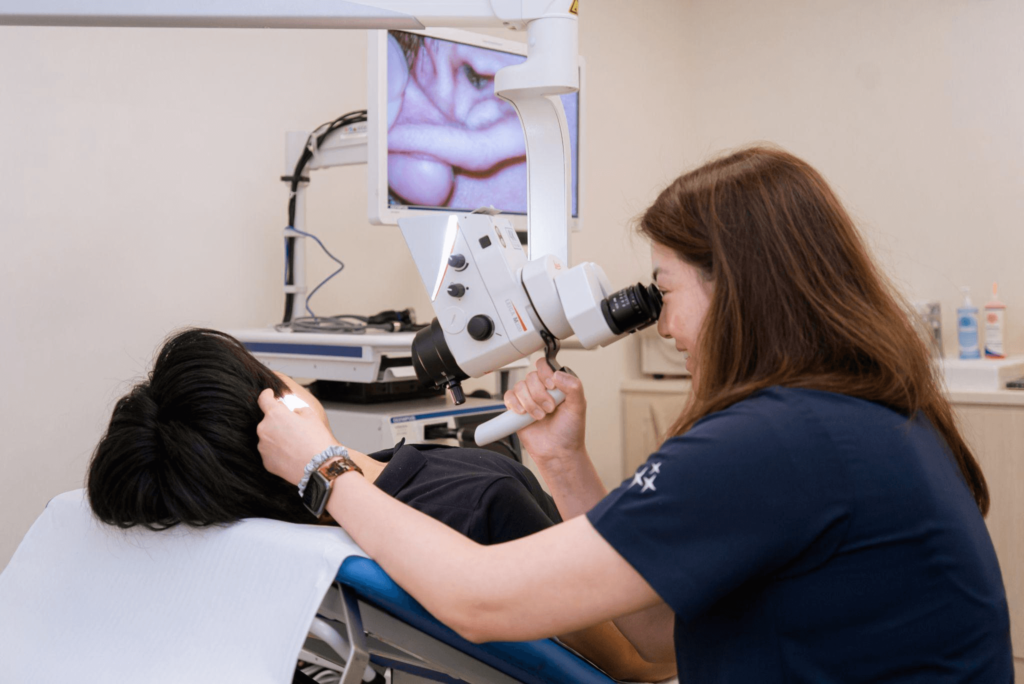
Maintaining optimal ear care is essential if you want a good overall quality of life. Conditions such as ear perforation or ear infections can impact your daily life, making it difficult to carry out regular tasks due to poor hearing, dizziness, ear pain, and other disruptive symptoms.
Here are a few common ear conditions that can have an impact on your life:
Ear Infections
While ear infections predominantly affect children, it is experienced by people of all ages. It occurs when there is fluid buildup in different parts of the ear, which provides viruses and bacteria a moist environment to thrive in.
Some ear infections people are prone to getting are:
- Outer Ear Infections (Otitis Externa): Also known as swimmer’s ear, this is an infection that affects the ear canal, caused by water remnants after swimming. It creates a suitably moist environment for viruses and bacteria.
- Middle Ear Infections (Ottis Media): When the eustachian tube (the tube which connects the middle ear to the nasopharynx) becomes blocked, it leads to fluid build-up behind the eardrum.
- Inner Ear Infections: On rare occasions, people will experience inner ear infections, which are linked to other underlying conditions such as vestibular neuritis or labyrinthitis.
- Ear Fungal Infections (Otomycosis): This condition is often caused by the growth of fungus in the ear canal, commonly Aspergillus and Candida. As these bacterial species thrive in warm and humid environments, the occurrence of ear fungal infections is common in countries such as Singapore.
- Chronic Ear Infections: These are long-term ear infections that persist despite medical treatment. In such situations, your ear, nose, and throat specialist will recommend surgical procedures to prevent further infections.
For mild ear infections, you don’t have to immediately rush off to a doctor. They usually go off on their own in a few days, and there are several ways you can treat it at home.
A few home remedies are:
- Painkillers: Paracetamol and Ibuprofen are quite useful in getting rid of any earaches you may have due to the ear infection. However, if you have a child under the age of 16 who has an ear infection, please do not give them painkillers unless prescribed by your doctor.
- Removal of discharge: Remove any discharge by wiping the ear (the external part) with cotton wool; this will keep your ear clean and less likely to worsen the ongoing infection.
These are some simple steps that will help speed up your recovery.
- Do not put cotton swabs into your ear to remove earwax. While this is marketed as an effective way of cleaning your ears, it can actually exacerbate the preexisting condition by pushing debris further into the ear canal, thereby worsening the infection.
- Do not let water or shampoo get into your ear while bathing.
- Do not go swimming with an ear infection. Swimming pools are a breeding ground for bacteria and can worsen the infection.
- Do not use decongestants or antihistamines. Some people hold the belief that they can help with ear infections, but there is no evidence to corroborate that fact.
To minimise the risk of frequent ear infections in your child, ensure that they have received the vaccinations recommended by the Ministry of Health.
If you or your child’s ear condition persists for a prolonged period of time, please consult an ENT specialist for other treatment solutions.
Ear infections can be treated in two ways by an ENT specialist: medication and/or surgery. Medication typically involves antibiotics, antifungal drops, and pain relievers, while surgical procedures include Balloon Dilation of the Eustachian Tube and Myringotomy and Grommet Tube Insertion.
Apart from ear infections, ENT specialists can also treat a host of other ear-related conditions. Let’s explore a few of them.
Hearing Loss
Hearing loss occurs when there’s an issue with one or multiple components of the ear. It can be divided into two distinct types depending on the cause:
- Conductive Hearing Loss: The inability for sound waves to be transmitted effectively to the cochlea. It stems from conditions within the outer ear canal, eardrums, middle bones, or middle ear space.
- Sensorineural Hearing Loss: Occurs due to damage sustained by the cochlea or auditory nerve.
An ear specialist in Singapore would recommend a treatment plan depending on the cause of hearing loss. For instance, if the hearing loss is associated with ageing (presbycusis), hearing aid implants are typically prescribed.
Tinnitus
Tinnitus is characterised by the perception of noise, such as ringing or buzzing, in the ear. It can be caused by various factors, such as:
- Exposure to loud sounds
- Ear infection
- Earwax build-up
- Age-related hearing loss
It can also be caused by other medical conditions, such as hypertension and temporomandibular joint (TMJ) disorders.
If you have tinnitus, your ENT specialist will recommend:
- Hearing aids
- Sound therapy
- Medication for stress and anxiety related to the condition
- Tinnitus retraining therapy (TRT)
Impacted Earwax/Cerumen Impaction
This condition is a result of wax build-up in the ear canal to the extent that it blocks sound from going into the ear.
It is typically caused by:
- Excessive production of earwax
- Narrow/irregular ear canal structure
- Frequent use of hearing aids or earplugs
- Improper ear cleaning (i.e., using cotton swabs, which push debris further into the ear).
Impacted earwax can be treated through earwax removal, utilising a small vacuum and other specialised instruments.
Vertigo
Many patients with vertigo will experience a false impression that their surroundings are moving/spinning. It stems from conditions impacting the inner ear, such as:
- Benign paroxysmal positional vertigo (BPPV)
- Vestibular migraine
- Vestibular neuritis
Based on the nature of the condition, an ENT specialist can prescribe various treatments, such as:
- Diet adjustments
- Medication
- Vestibular rehabilitation exercises
- And on rare occasions, surgical intervention.
Hole in the Eardrum
This is defined as a rupture or tear in the thin tissue that separates the ear canal from the middle of the ear. It is usually caused by infections, trauma, sudden pressure changes, and loud noises.
Your doctor will prescribe one or more of the following treatment options:
- Observation: In most cases, holes will heal on their own with time.
- Medication: This is prescribed when infections are present.
- Patch: For larger tears, a chemical patch will be used to stimulate the healing process.
If all these procedures fail, your doctor might opt for surgeries such as tympanoplasty.
Ear Lumps/Bumps
Ear lumps are abnormalities that affect the external ear or the earlobe. A few common types are:
- Cysts
- Keloids
- Skin tags
- Benign tumours
- Malignant tumors
Your ear specialist will recommend an appropriate treatment plan depending on the type of ear lumps you have.
If you see any lumps on your ear, it’s important to visit an ENT clinic in Singapore as soon as possible. This is because, if the lump turns out to be a malignant tumour, it’s better to get it treated fast before it progresses to an advanced stage.
Foreign Object in Ear
A few examples of foreign objects entering the ear are insects crawling into the ear while people are sleeping. On the other hand, children could push small objects inside their ear canals while playing. Foreign objects can enter the ear through voluntary or involuntary methods. For instance, young children may insert small objects into their ear canals, and in some cases, insects may crawl into the ear while you are asleep.
In such scenarios, your doctor may perform:
- Manual removal with a pair of tweezers
- Irrigation with lukewarm water
- Suction with a small vacuum
All of the aforementioned conditions have various overlapping symptoms and causes, so how should you know when to consult an ENT specialist?
When to Consult an Ear Specialist in Singapore
If you experience any of the following symptoms, you should go to the nearest ENT clinic in Singapore:
- Ear pain/pressure
- Dizziness
- Fluid leaking from the ear
- Difficulty hearing
- Humming or buzzing noises in the ear
While home remedies may provide temporary relief, they often fail to address the underlying cause of your symptoms. ENT specialists are trained to accurately diagnose and treat a variety of ear conditions with specialised tools and medical techniques.
The Risks of Leaving Ear Infections Untreated
A majority of ear infections do not cause issues. Swelling and/or fluid buildup, ear infections often cause hearing loss, and usually, it clears up along with the infection. However, recurring and chronic ear infections could potentially lead to dangerous complications.
For instance, leaving this condition untreated for prolonged periods could cause:
- Hole in the Eardrum: If there is excessive fluid buildup in the middle ear due to chronic infections, it can cause a hole in the eardrum. In complex cases, surgical intervention is required.
- Meningitis: Another risk of leaving ear infections untreated is that the infection could spread beyond the ear to nearby tissue and, in rare cases, to the skull. If the infection reaches the skull, it will result in meningitis.
- Permanent Hearing Impairment: Excessive fluid in the middle ear due to chronic ear infections can lead to more severe damage to the eardrum, resulting in a more permanent hearing impairment.
- Pus-filled Cysts: More commonly, infections will spread to the mastoid, just behind the ear, which can damage the bone and result in pus-filled cysts.
- Delays in Speech and Skills Development: In infants, hearing loss can result in delays in developing speaking and age-linked skills, even if the hearing loss is not permanent.
- Balance Issues: Your inner ear plays a crucial role in maintaining balance. Therefore, when an infection affects this area, it can lead to dizziness, vertigo, and other balance-related problems. These symptoms are particularly dangerous for older adults, as they increase the risk of falls and injuries.
These issues underscore the importance of monitoring symptoms in the case of an ear infection and treating them as soon as they come up. An ENT specialist is medically trained to handle these conditions, as they go through extensive training in their related fields.
Otolaryngologists (ENT specialists) need to apply to medical school after they complete their undergraduate studies. Thereafter, they are required to go through 5 years of residency training in their chosen field.
If you are seeking comprehensive treatment solutions for ear infections, consider booking a consultation with us at Aglow ENT Centre. Our experienced ENT specialist, Dr Ker Liang, ensures that your ear infections are treated effectively with her holistic and patient-centred approach to treatment solutions.
Consult Dr Ker Liang, an Experienced Ear Specialist in Singapore for Ear Infections

Dr Ker Liang is an experienced Ear, Nose and Throat Specialist in Singapore and the Medical Director of Aglow ENT Centre. She has over 14 years of experience with ear infections and other ENT-related conditions. She provides personalised and comprehensive care to help you manage your symptoms effectively. Located in Mount Elizabeth Hospital (Orchard), you can walk in or book a same-day consultation at Aglow ENT Centre and start your journey toward relief.