What is a Thyroid Surgery (Thyroidectomy) and When Do I Need it?

A thyroidectomy is a surgical procedure that involves the removal of the thyroid gland, often performed on individuals diagnosed with conditions such as thyroid cancer, an enlarged thyroid, or an overactive thyroid. A noticeable lump in the centre of the neck may signal an underlying thyroid condition. Depending on its severity, surgical removal could be necessary as part of thyroid lump treatment.
In some cases, surgery is an effective way to address the issue and significantly improve the patient’s quality of life. Therefore, it’s crucial to understand what a thyroidectomy involves, who it is intended for, and what to expect throughout the process.
What is Thyroidectomy?
The thyroid gland is a butterfly-shaped organ located at the base of the neck, directly below the Adam’s apple. It produces hormones that regulate important bodily functions, including metabolism, energy generation, and mood. However, your thyroid surgeon may recommend total or partial thyroid gland removal as a treatment for thyroid cancer or an enlarged thyroid.
During a thyroid surgery, an ENT (Ear, Nose and Throat) head and neck surgeon will remove part or the entire thyroid gland, which is found in the front of the neck. This surgery often requires an incision at the base of the neck. The thyroid surgeon may also need to examine and potentially remove lymph nodes in the neck, around the thyroid gland to check for the spread of disease, especially in cases of thyroid cancer. This process is critical for ensuring all affected tissues are addressed, which can help prevent recurrence or manage the spread of cancer.
Patients may go home the same day after a partial thyroidectomy. However, for more extensive surgeries such as a total thyroidectomy, post-surgery admission is necessary for monitoring.
How to Choose a Qualified Thyroid Surgeon in Singapore
Selecting the right thyroid surgeon is essential for a safe procedure and smooth recovery. Consider these step-by-step points when evaluating potential specialists:
- Check the Surgeon’s Specialty and Experience
Ensure the surgeon is trained in ENT or head & neck surgery and has substantial experience performing thyroidectomies. - Verify Hospital Affiliations and Accreditations
A reputable surgeon should be affiliated with well-established hospitals and accredited medical institutions, reflecting high standards of care. - Ask About Surgical Volume and Success Rates
Enquire about the number of thyroid surgeries performed and their outcome statistics, which indicate reliability. - Discuss Consultation, Outcomes, and Recovery Support
A thorough consultation should cover the procedure details, expected results, potential risks, and available post-operative care or support to ensure a safe recovery.
Choosing a qualified thyroid surgeon helps ensure your treatment is safe and tailored to your needs.
Types of Thyroidectomy
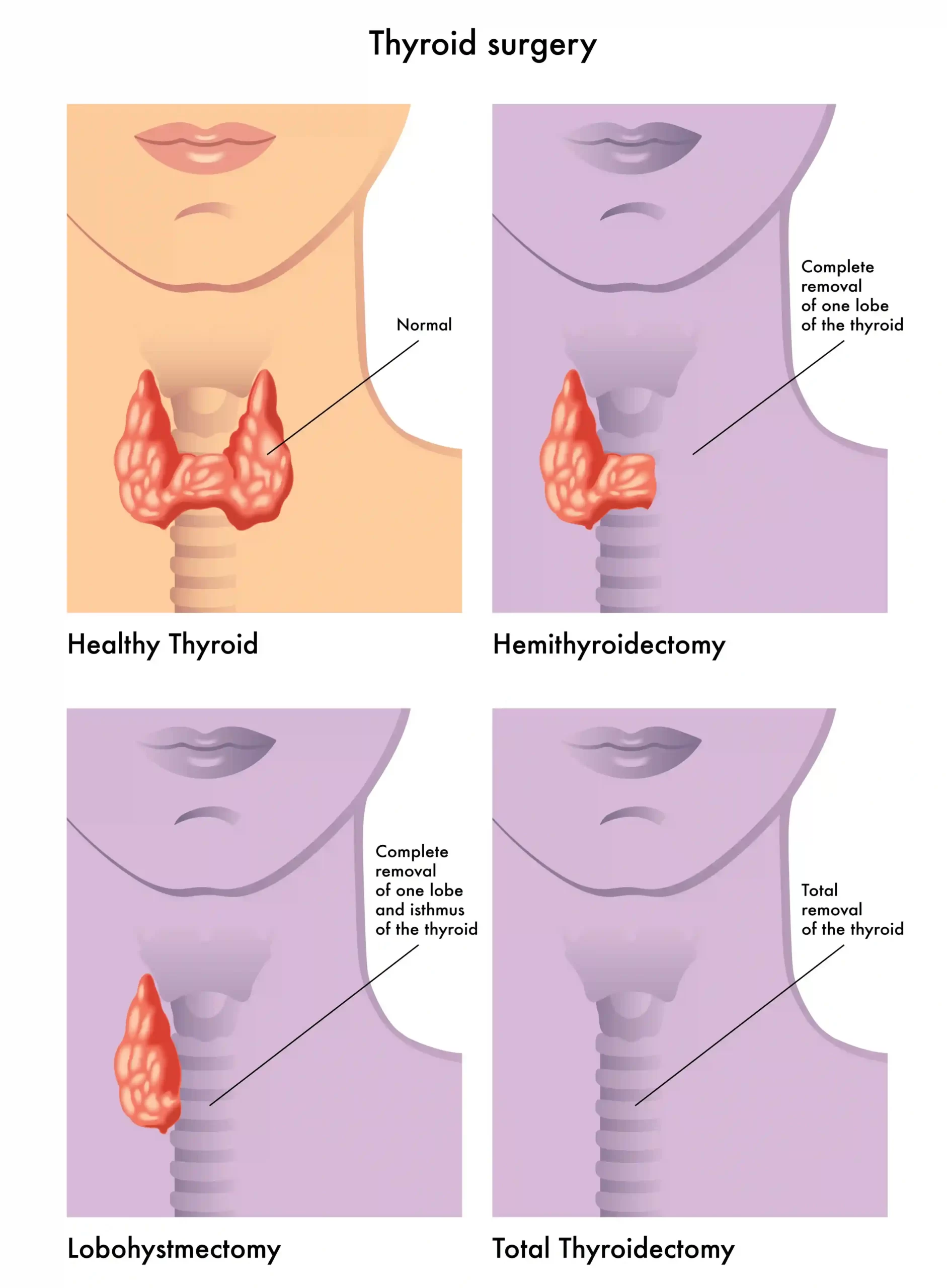
The thyroid gland comprises a left and a right lobe in front of the neck. Depending on the patient’s condition, an ENT head and neck surgeon may perform either:
- Total Thyroidectomy: Removal of the entire thyroid gland, which is more common in patients with an enlarged thyroid or a large cancerous tumour.
- Partial Thyroidectomy (Hemithyroidectomy): Removal of one thyroid lobe.
- Isthmusectomy: Removal of the central part of the thyroid gland that bridges the two lobes.
If one lobe of the thyroid gland is removed, the remaining lobe takes over its function, and most patients do not require medication. However, those who undergo total thyroid removal will no longer produce thyroid hormones, which may lead to an underactive thyroid (hypothyroidism). Some of the symptoms include dry skin, fatigue, and weight gain. Fortunately, this can be managed with medication. Your ENT head and neck surgeon will guide your recovery and may refer you to an endocrinologist for ongoing hormone monitoring.
Who Needs a Thyroidectomy?
The need for thyroid removal surgery depends on an ENT head and neck surgeon’s medical evaluation. Key considerations for thyroid surgery include:
- Removing suspected thyroid cancer to prevent its spread.
- Relieving compression symptoms if a cancerous or enlarged thyroid presses on surrounding structures, causing difficulty swallowing or breathing.
- Managing an overactive thyroid (hyperthyroidism) when medication fails, helping to restore balanced hormone levels and improve overall well-being.
- Addressing cosmetic concerns by removing a visible lump on the neck.
Who can Perform Thyroidectomy?
Given the thyroid gland’s delicate position in the neck and its proximity to important structures like the voice box, working with a specialist experienced in this area is essential. In Singapore, a thyroid surgery can be performed by a qualified thyroid surgeon. Their experience in performing numerous thyroidectomies enables them to provide patients with suitable care and safety.
What to Expect
Understanding what to expect before, during and after surgery can boost your confidence and help you plan for a smooth recovery. If you’re preparing for thyroid surgery in Singapore, here are some key steps to help you get ready:
Before the Surgery
Before the procedure, it is recommended to book a consultation to better understand your thyroid nodule condition with a Head and Neck Surgeon. These surgeons often practice within ENT clinics in Singapore and can advise on appropriate evaluation and management, including:
- Health Evaluation: Your thyroid surgeon will assess your overall health and medical history to determine your eligibility for surgery.
- Procedure Overview: You will be provided a detailed explanation of the surgery, including what to expect before, during, and after.
- Pre-surgery Adjustments: Some patients may require medication changes and lifestyle modifications, such as quitting smoking and fasting, prior to surgery to minimise complications and optimise recovery.
During the Surgery
Once in the operating theatre, an anaesthetist will administer general anaesthesia to ensure the patient remains asleep and pain-free throughout the procedure. The ENT head and neck surgeon will then proceed with the operation.
In most cases, ENT head and neck surgeons perform thyroid surgery by making a low incision along the natural crease of the neck to minimise visible scarring.
If a patient undergoes surgery to remove a suspected thyroid cancer, the surrounding lymph nodes may also be assessed to ensure the cancer has not spread. Given the delicate nature of the surgical area, special equipment may be used to monitor the vocal cords and prevent complications that could lead to permanent damage.
Thyroidectomy typically takes 2 to 3 hours, though the duration may vary depending on the extent of the surgery.
After the Surgery
Once the surgery is over, patients will continue to be monitored and transferred to a recovery room. A drain may be placed under the neck incision in some patients to prevent fluid buildup, which is usually removed 1-2 days after the surgery.
For patients who experience neck pain and hoarse or weak voice, that is a common temporary side effect of the surgery. Patients will be able to continue to eat and drink as usual after surgery. In the case of a partial thyroidectomy, it is possible for patients to return home the same day if they are deemed fit by their thyroid surgeon.
Recovery Tips
- Most patients can usually resume regular activities once they return home.
- Patients are advised to wait at least 10 to 14 days before engaging in strenuous activities, such as heavy lifting or high-impact sports.
- It may take up to a year for the surgical scar to fade. Routine use of sunscreen can help make the scar less visible.
The Benefits of Thyroidectomy
Patients who have undergone thyroid surgery in Singapore find that they are able to:
- Minimise the risk of cancer spread in the case of thyroid cancer or suspicious nodules.
- Manage symptoms caused by an enlarged thyroid, such as difficulty swallowing or breathing.
- Manage hyperthyroidism that is not responsive to other treatments.
With these benefits, patients are likely to continue enjoying a good quality of life without the fear of serious health complications.
What is the Success Rate of Thyroidectomy?
Thyroidectomy is generally considered a safe surgery, particularly when performed by qualified surgeons. The success rate differs according to the specific condition being treated but is generally high. For conditions like Graves’ disease, it’s reported as an effective treatment with a lower all-cause death rate and reduced medical and psychological complications.
What are the Potential Risks and Complications of Thyroidectomy?
Thyroidectomy, like any surgery, carries potential risks and side effects. Common side effects include sore throat, wound pain, swelling and redness. More serious risks include damage to the recurrent laryngeal nerves and superior laryngeal nerves, which can cause permanent vocal changes. To minimise risks and complications of thyroid surgery, patients are advised to seek treatment from ENT head and neck surgeons in Singapore as they are experienced in navigating these nerves.
A total thyroidectomy necessitates long-term thyroid hormone replacement post-surgery. The likelihood and severity of side effects can differ significantly from patient to patient, influenced by factors like the extent of surgery and individual anatomical variations.
When is a Thyroidectomy Necessary?
A thyroidectomy is known as a generally successful procedure with minimal side effects to remove thyroid cancer and manage enlarged thyroids. If you are diagnosed with a thyroid condition or suspect a thyroid condition due to relevant symptoms, schedule a consultation with an ENT head and neck surgeon for proper diagnosis and accurate treatment. In most cases, a thyroidectomy is necessary to ensure patients will not face persistent thyroid issues that could be life-threatening, as in the case of cancer.
You can book an appointment with Dr Ker Liang, an experienced ENT head and neck surgeon in Singapore. With more than 14 years of experience in otolaryngology, Dr Ker Liang is experienced to perform thyroid surgeries in Singapore and guide you through a full recovery.
Frequently Asked Questions (FAQs)
What is thyroid surgery, and when do I need it?
Thyroid surgery involves removing part or all of the thyroid gland to treat conditions like thyroid nodules, goitres, or thyroid cancer. You may need it if lumps are suspicious, causing symptoms, or affecting hormone levels.
How is thyroidectomy performed in Singapore?
Thyroidectomy in Singapore is typically done under general anaesthesia through a small neck incision, using precise techniques to protect vital nerves and glands. Minimally invasive or endoscopic options may be available depending on the case.
What are the risks and recovery time for thyroid surgery?
Risks include bleeding, hoarseness, low calcium levels, and infection, though complications are uncommon with experienced surgeons. Most patients recover within 1–2 weeks and return to normal activities soon after.
Can thyroid lumps be removed safely?
Yes, thyroid lumps can be removed safely, especially when performed by an experienced ENT or head and neck surgeon. Modern imaging and surgical techniques significantly reduce risks.
Who is a qualified thyroid surgeon in Singapore?
A qualified thyroid surgeon in Singapore is typically an ENT or head and neck specialist with extensive training in thyroid and neck surgeries. Look for surgeons accredited by the MOH and practising in reputable hospitals or ENT centres.
Do I need total or partial thyroid removal?
Your doctor will recommend a total or partial thyroidectomy based on the size, nature, and test results of the lump. Partial removal is often used for benign nodules, while total removal may be needed for cancer or widespread disease.
How long does thyroidectomy surgery take?
A thyroidectomy typically takes 1.5 to 2 hours to complete.
Can thyroidectomy affect my vocal cords?
Thyroidectomy can potentially affect the vocal cords, usually temporarily (rarely permanently), depending on each patient’s condition.
Can thyroid cancer recur after a total thyroidectomy?
The chances of thyroid cancer recurring are low unless the previous cancer was not completely removed or has spread to other parts of the neck.
For comprehensive treatment for thyroid cancer in Singapore, we recommend having a consultation with our ENT specialist, Dr. Ker Liang. Visit our contact page to book an appointment.
Will thyroidectomy leave a scar on my face?
A thyroidectomy is unlikely to leave a scar on the face. The incision is generally made in the lower neck area, following the natural crease of the neckline to conceal the scar.
Is the procedure claimable via insurance?
Thyroidectomy is claimable via insurance in Singapore. Do check with our friendly and patient clinic staff for further confirmation.
Medical Teaching
Assistant Professor Ker Liang has a passion for teaching and is an Assistant Professor with NUS Yong Loo Lin School of Medicine (YLLSOM). As the NUS-NUH Otolaryngology Department Undergraduate Medical Director, Dr Ker Liang supervises the training of medical students from YLLSOM, NUS. She is actively involved
in the training of postgraduate junior doctors and residents in the Head and Neck Surgery department. She was conferred with an Undergraduate Teaching Award by the National University Health System in 2016 for her outstanding efforts as an Otolaryngology educator.
Medical Teaching
Assistant Professor Ker Liang has a passion for teaching and is an Assistant Professor with NUS Yong Loo Lin School of Medicine (YLLSOM). As the NUS-NUH Otolaryngology Department Undergraduate Medical Director, Dr Ker Liang supervises the training of medical students from YLLSOM, NUS. She is actively involved
in the training of postgraduate junior doctors and residents in the Head and Neck Surgery department. She was conferred with an Undergraduate Teaching Award by the National University Health System in 2016 for her outstanding efforts as an Otolaryngology educator.