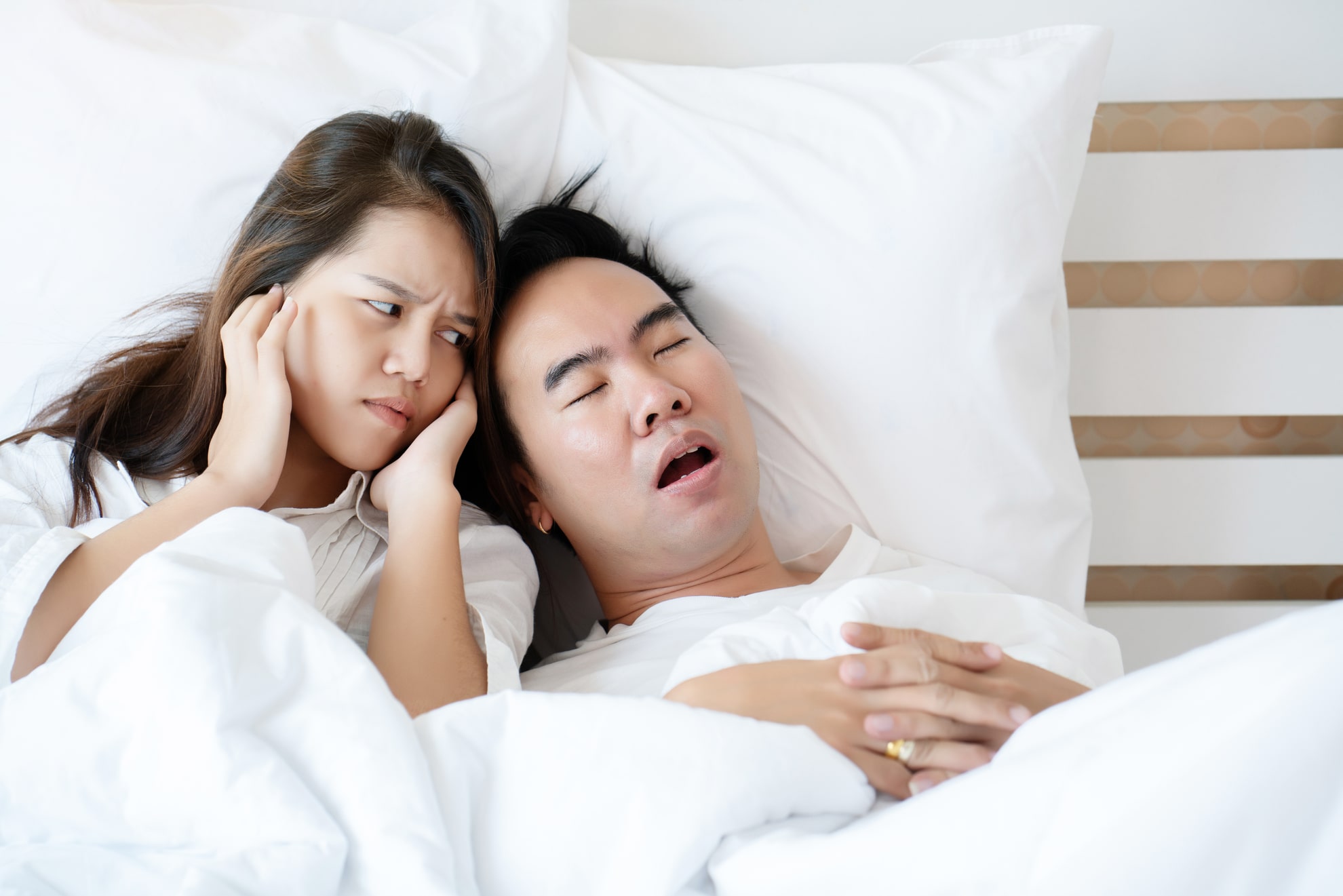
Snoring, often deemed as a harmless nuisance, can be indicative of underlying health issues. This loud, harsh sound is produced when the tissues in our throats vibrate due to an obstruction in airflow in our upper aerodigestive tract. Although occasional snoring is common, persistent snoring may signal a serious health condition – Obstructive Sleep Apnoea (OSA).
During episodes of OSA, a patient may be deprived of oxygen from partial or complete pauses in breathing. Left untreated, this serious condition can significantly reduce quality of life, causing chronic lethargy, headaches, and other serious health issues.
If your snoring significantly annoys your bed partner or leaves you feeling persistently tired, you may want to find a snoring doctor in Singapore.
Consult our sleep specialist in Singapore at Aglow ENT Centre to pinpoint the cause and detect potentially larger issues.
What is Snoring?
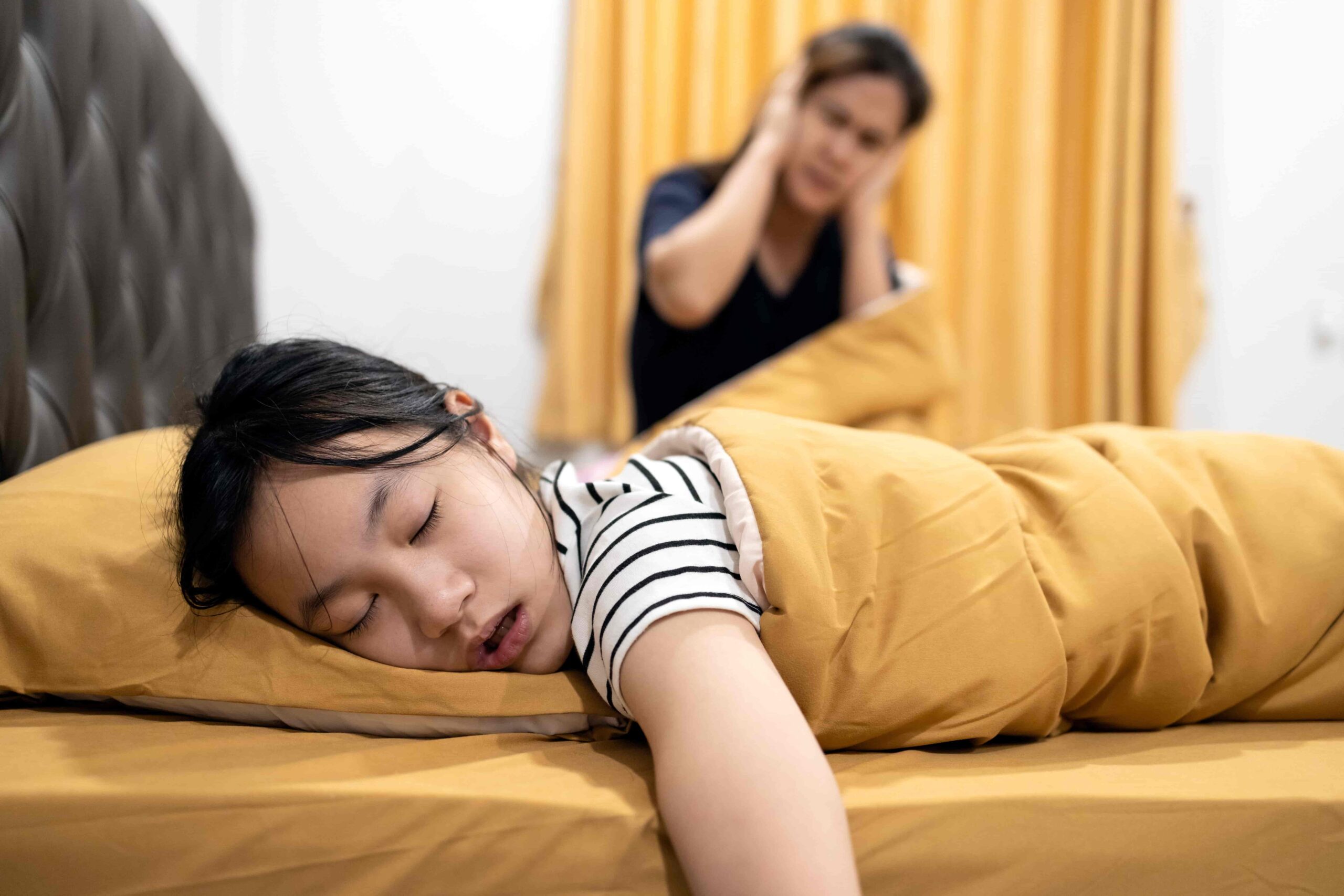
Although often identified as noisy breathing during sleep, snoring occurs when airflow is blocked through the passages at the back of the mouth and nose.
Causes of Snoring
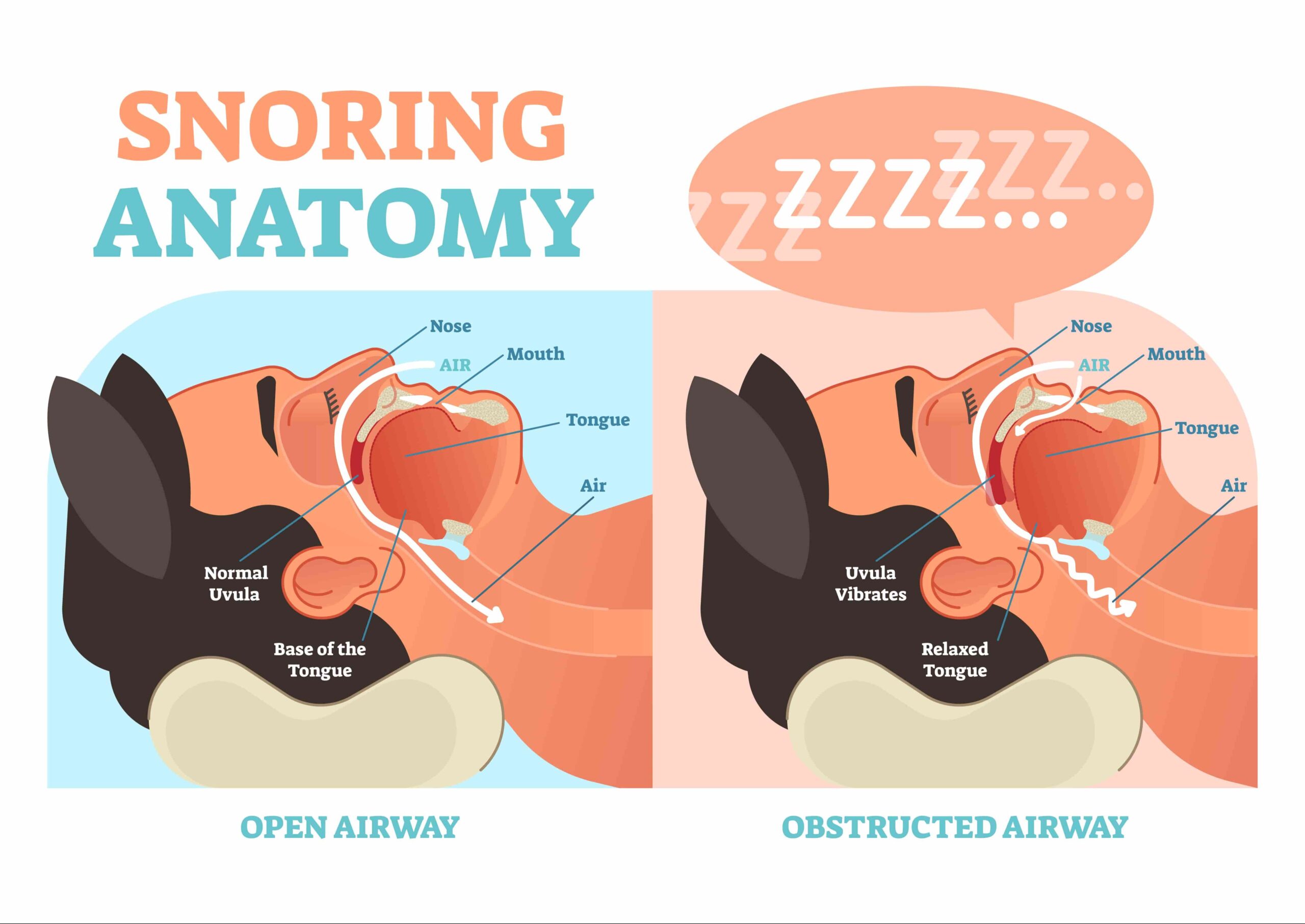
Snoring typically happens when the nose, soft palate, uvula, base of the tongue, and other soft tissues in the throat obstruct airflow during inhalation, causing vibrations.

While snoring predominantly occurs in adult males, it can also affect children. In such cases, parents are advised to consult a paediatric ENT specialist to explore snoring treatments in Singapore and assess for potential OSA, which is frequently caused by enlarged tonsils and adenoids.
Treatment options for snoring vary depending on the underlying cause and severity. Common approaches include lifestyle changes such as weight management and sleep position adjustment, medical devices like CPAP machines or mandibular advancement devices, and surgical procedures such as tonsillectomy, adenoidectomy, or nasal airway correction. An ENT specialist in Singapore can help determine the most suitable treatment plan based on individual needs.
At Aglow ENT Centre, Dr Ker Liang, our qualified ENT specialist, sees patients of all ages, especially children. Not only does she have deep expertise in paediatric ENT conditions, but she also has a proven track record in swiftly building rapport with child patients.
What is Obstructive Sleep Apnoea?
Obstructive Sleep Apnoea (OSA) is more serious than snoring. While snoring is simply the noise caused by vibrations in the airway, OSA involves repeated episodes of paused breathing during sleep due to blocked airways. Snoring is a common symptom of OSA, but it does not always indicate the presence of sleep apnea.
OSA, a condition where the airway becomes partially or completely blocked, can lead to pauses in breathing. Patients with OSA typically experience periods when breathing slows or stops at least five times during every hour of sleep.They can last for seconds to minutes, disturbing normal sleep patterns and chronically reducing oxygen levels in the blood.
This disruption can lead to hypoxia (the body or parts of it become oxygen-deprived), bringing about other medical complications, including:
- Cardiovascular diseases
- Diabetes
- Headache
- Fatigue
- Sexual dysfunction
- Depression
- Memory loss
Furthermore, if sleep apnea is left untreated, it can also contribute to chronic inflammation in the airways. The repeated interruptions in breathing can place stress on the body, leading to inflammatory responses that may cause enlarged lymph nodes, also known as lymph node swelling.
What are the Symptoms of Obstructive Sleep Apnoea?
The presence of OSA can manifest in different symptoms in various ways throughout the day. During the day, patients often experience:
- Chronic fatigue
- Poor concentration
- Morning headaches and dry mouth
- Irritability
As the day progresses into night, more telltale signs of OSA may become apparent during sleep:
- Gasping for air while sleeping
- Frequent awakenings and restlessness
- Nocturia (frequent urination)
- Loud snoring
Certain symptoms may be more noticeable to a partner in bed as opposed to the patients themselves.
In children, signs of severe sleep disruption can include behavioural disorders, short attention spans, and poorer academic performance, all rooted in poor oxygen intake at night.
If you experience any of the aforementioned symptoms, you may need to seek treatment options for sleep apnea in Singapore. Consult our ENT specialist at Aglow ENT Centre, Dr Ker Liang, for comprehensive treatment solutions.
What are the Causes of Obstructive Sleep Apnoea?
OSA can typically be attributed to a narrower upper airway and the repetitive collapse of the airway, which leads to low oxygen levels, particularly during sleep.
In children, a common cause of a restricted upper airway is the presence of large tonsils and adenoids, which may require surgical intervention (e.g., tonsillectomy and adenoidectomy) by an ENT specialist as part of their treatment.
Certain risk factors can raise the chance of suffering from OSA. These factors include certain medications, consumption of alcohol, and obesity, which can affect the frequency of airway collapse, among others.
How is Obstructive Sleep Apnoea Diagnosed by an ENT Specialist?

Under the care of an ENT specialist in Singapore, patients suspected of OSA may be recommended through a series of evaluation processes. These procedures typically include:
Evaluation
Description
Objective
Naso-endoscopy
A minimally invasive procedure that visualises the upper aerodigestive tract. It involves the usage of an endoscope, a thin and flexible tube equipped with a miniature camera and light source.
Evaluates if snoring is caused by a nasal allergy, infection, obstruction or enlargement of tonsils and adenoids.
Sleep History
Non-invasive collection of past snoring and sleeping patterns, daytime sleepiness and more.
Understand patterns to determine if OSA is present.
Sleep Study (Polysomnography (PSG))
Non-invasive overnight monitoring of patient’s sleep, including oxygen levels, heart rhythm and more.
Helps determine if a patient has OSA and the severity of their condition.
What are the Available Obstructive Sleep Apnoea Treatments in Singapore?
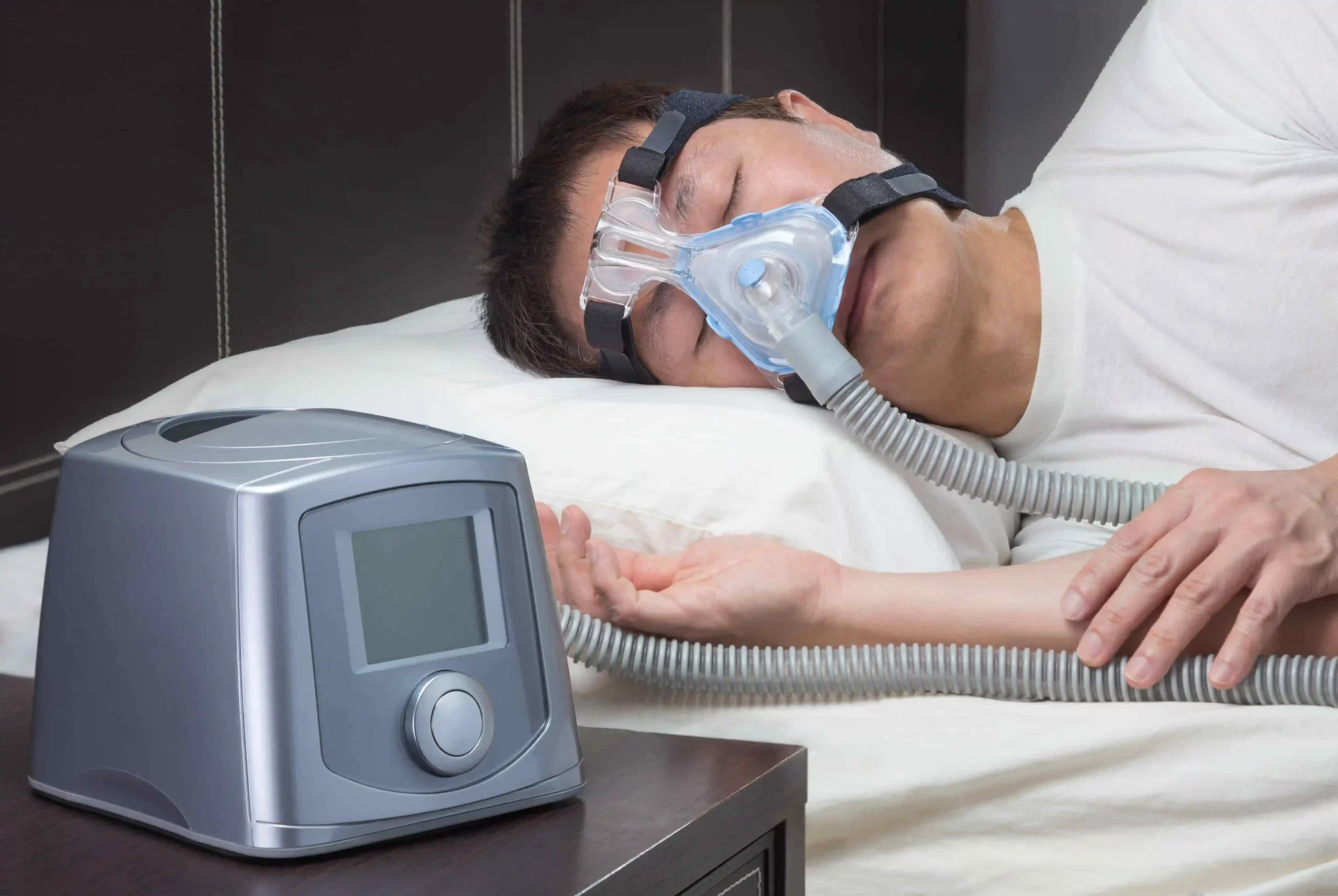
Considering the potential long-term complications of OSA, it’s crucial to seek appropriate sleep apnea treatment once diagnosed.
There are a variety of sleep apnea treatments available in Singapore to help patients reduce snoring and optimise their quality of life, including sleep apnea surgery and a few other medical, non-surgical alternatives.
At Aglow ENT Centre, our ENT head and neck surgeon, Dr Ker Liang, can provide a personalised treatment plan tailored to each individual’s needs. She is well-versed in executing a comprehensive range of OSA treatments, including sleep apnea surgery.
Medical Treatments
When deemed appropriate, patients may be prescribed a series of medical treatments, such as nasal sprays, dental splints, or Continuous Positive Airway Pressure (CPAP) devices. A CPAP device provides patients with a continuous air supply throughout the night via a nasal mask.
Lifestyle Modifications
Along with medication, your ENT specialist may also suggest lifestyle changes that could improve your OSA symptoms. Conservative measures, such as the following, may support these:
- Weight loss
- Sleep on your side
- Stop smoking
- Avoid sleep deprivation
- Avoid alcohol and sedatives
- Engage in regular exercise
Surgical Treatments
For more severe cases, sleep specialist in Singapore may recommend sleep apnea surgery targeting different parts of the upper airway to enhance the patient’s airflow and improve their OSA symptoms:
- Septoplasty – a minor surgery to straighten a crooked nasal septum.
- Turbinoplasty – a minor surgery to remove excess tissue deep inside the nose.
- Tonsillectomy & Adenoidectomy – minor surgeries to remove enlarged tonsils (small, round pieces of tissue at the back portion of the throat) and adenoids (similar tissues at the back of the nose), typically done simultaneously.
- Uvulopalatopharyngoplasty – a major surgery involving the removal or reshaping of tissues in the throat.
Clinical Practice and Qualifications
Please consult an ENT specialist if you are suffering from any ear, nose, or throat symptoms. It is also advisable to visit an ENT doctor if you experience persistent mouth breathing due to a chronic blocked nose or encounter snoring issues.
If you are currently suffering from sleep apnea and are in Singapore, consult our ENT specialist, Dr Ker Liang, at Aglow ENT Centre.
Dr Ker Liang sees adults and children for general ENT conditions and provides comprehensive management in a broad range of Ear, Nose, and Throat, as well as Head and Neck conditions. In particular, she specialises in treating throat and voice conditions, including persistent sore throat, voice issues, snoring, and Obstructive Sleep Apnoea (OSA).
Assistant Professor Ker Liang has a passion for teaching and is an Assistant Professor with NUS Yong Loo Lin School of Medicine (YLLSOM). As the NUS-NUH Otolaryngology Department Undergraduate Medical Director, Dr Ker Liang supervises the training of medical students from YLLSOM, NUS. She is actively involved
in the training of postgraduate junior doctors and residents in the Head and Neck Surgery department. She was conferred with an Undergraduate Teaching Award by the National University Health System in 2016 for her outstanding efforts as an Otolaryngology educator.
Assistant Professor Ker Liang has a passion for teaching and is an Assistant Professor with NUS Yong Loo Lin School of Medicine (YLLSOM). As the NUS-NUH Otolaryngology Department Undergraduate Medical Director, Dr Ker Liang supervises the training of medical students from YLLSOM, NUS. She is actively involved
in the training of postgraduate junior doctors and residents in the Head and Neck Surgery department. She was conferred with an Undergraduate Teaching Award by the National University Health System in 2016 for her outstanding efforts as an Otolaryngology educator.
Lorem ipsum dolor sit amet, consectetur adipiscing
Lorem ipsum dolor sit amet, consectetur adipiscing elit. Ut elit tellus, luctus nec ullamcorper mattis, pulvinar dapibus leo. Lorem ipsum dolor sit amet, consectetur adipiscing elit. Ut elit tellus, luctus nec ullamcorper mattis, pulvinar dapibus leo.
Lorem ipsum dolor sit amet, consectetur adipiscing
Lorem ipsum dolor sit amet, consectetur adipiscing elit. Ut elit tellus, luctus nec ullamcorper mattis, pulvinar dapibus leo. Lorem ipsum dolor sit amet, consectetur adipiscing elit. Ut elit tellus, luctus nec ullamcorper mattis, pulvinar dapibus leo.
Lorem ipsum dolor sit amet, consectetur adipiscing
Lorem ipsum dolor sit amet, consectetur adipiscing elit. Ut elit tellus, luctus nec ullamcorper mattis, pulvinar dapibus leo. Lorem ipsum dolor sit amet, consectetur adipiscing elit. Ut elit tellus, luctus nec ullamcorper mattis, pulvinar dapibus leo.
Lorem ipsum dolor sit amet, consectetur adipiscing
Lorem ipsum dolor sit amet, consectetur adipiscing elit. Ut elit tellus, luctus nec ullamcorper mattis, pulvinar dapibus leo. Lorem ipsum dolor sit amet, consectetur adipiscing elit. Ut elit tellus, luctus nec ullamcorper mattis, pulvinar dapibus leo.
Lorem ipsum dolor sit amet, consectetur adipiscing
Lorem ipsum dolor sit amet, consectetur adipiscing elit. Ut elit tellus, luctus nec ullamcorper mattis, pulvinar dapibus leo. Lorem ipsum dolor sit amet, consectetur adipiscing elit. Ut elit tellus, luctus nec ullamcorper mattis, pulvinar dapibus leo.
Frequently Asked Questions (FAQs)
Where can I find a snoring doctor in Singapore?
You can consult an ENT specialist like Dr Ker Liang at Aglow ENT Centre, who evaluates snoring and related sleep issues to recommend tailored treatments.
What are some comprehensive snoring treatments in Singapore?
Treatments range from lifestyle modifications and medical devices to surgical options; Dr Ker Liang at Aglow ENT Centre can assess your condition and advise a suitable approach.
How is sleep apnoea treated in Singapore?
Sleep apnoea is commonly managed with CPAP therapy, oral appliances, or surgery, depending on severity.
When is sleep apnoea surgery necessary?
Surgery is considered when non-invasive treatments like CPAP or oral devices are insufficient; an ENT specialist can determine if you are a candidate after a thorough evaluation.