Understanding Epistaxis (Nosebleeds)
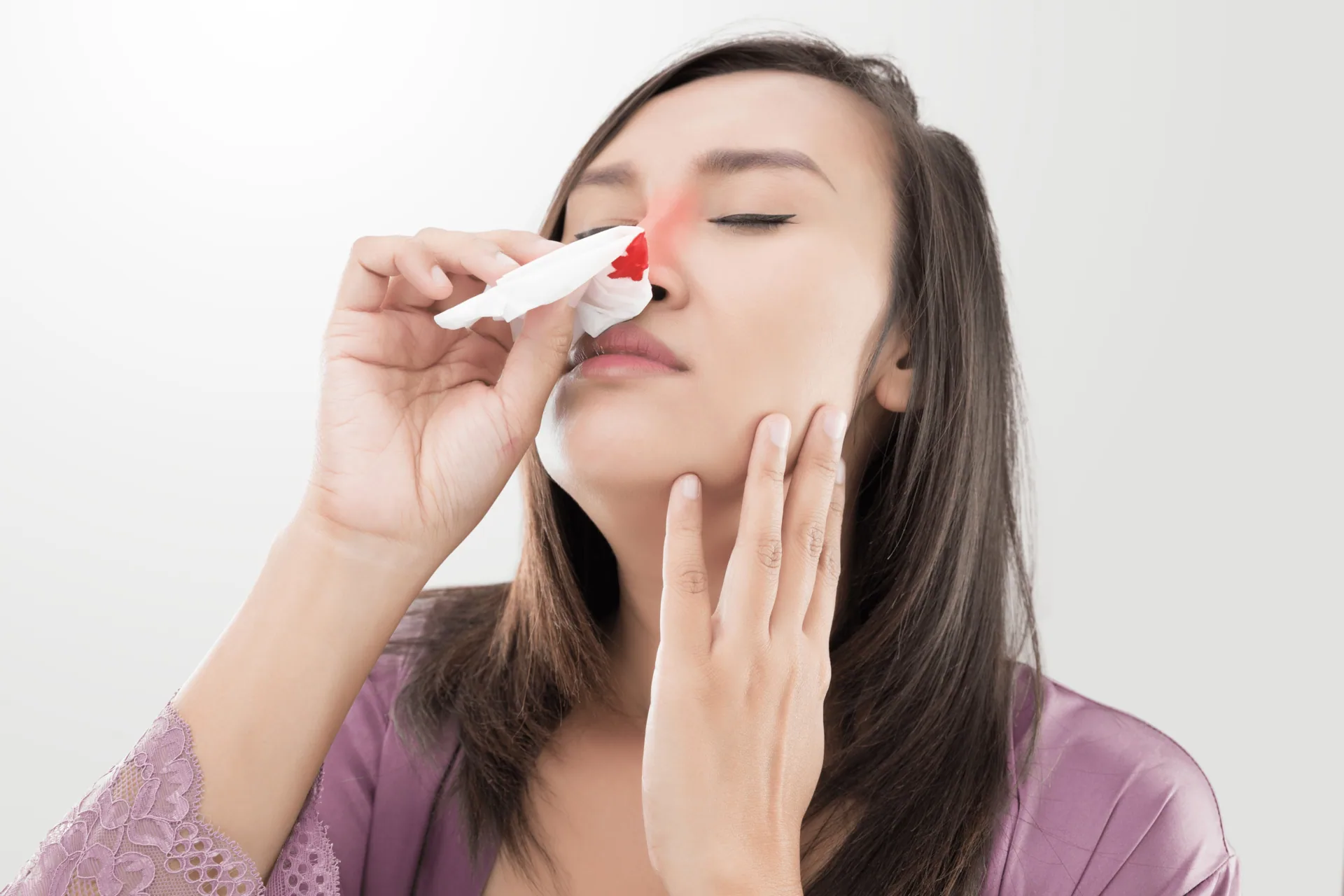
Epistaxis, commonly known as a nosebleed, is a frequent medical concern that affects many in Singapore, from the young to the elderly. While often benign, the sight of blood can be alarming, making it crucial to understand both the management and underlying causes of epistaxis. This article aims to demystify nosebleeds, providing insights into their causes, when to seek medical attention from a specialist, and how to prevent them effectively.
How do Nosebleeds Occur?
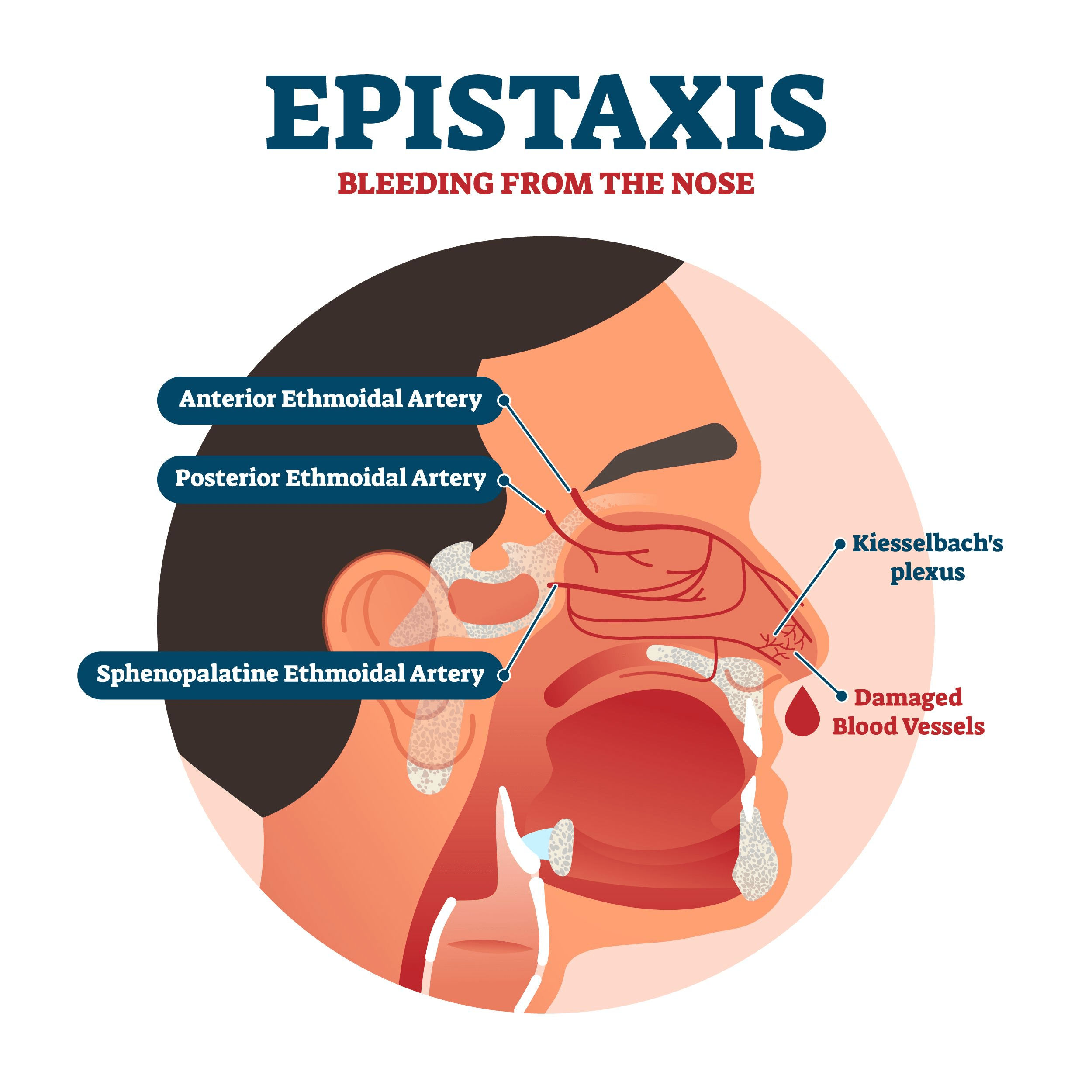
Epistaxis is characterised by bleeding from the nasal cavity or nasopharynx, the area inside the nose extending to the back of the throat. It’s a symptom rather than a disease, indicating irritation, trauma, or an underlying condition affecting the nasal membranes. The nasal cavity, richly supplied with blood vessels, is particularly prone to bleeding when these vessels are damaged.
Types of Nosebleeds
There are two types of nosebleeds.
- Anterior Nosebleeds: Originates from the front of the nose, are more common and often less severe. Anterior nosebeleds contribute to the majority of epistaxis cases.
- Posterior Nosebleeds: Originates from deeper within the nasal cavity and can be more profuse, often requiring medical intervention.
What Causes Nosebleeds?
The causes of epistaxis range from simple to complex. Some of the common causes of nosebleeds are:
- Dry Air
- Nasal Trauma
- Infections
- Allergies
- Certain medications like anticoagulants
- High blood pressure and alcohol use can also exacerbate the risk of nosebleeds
Who are More Prone to Nosebleeds?
Certain groups who are more prone to experiencing nosebleeds include:
- Children: Due to their tendency for nasal exploration
- Elderly: They may have more fragile blood vessels or be on medications that affect bleeding.
- Individuals in Certain Environments: Individuals in dry climates or who are exposed to certain occupational hazards can increase the risk of nosebleeds.
Symptoms of Nosebleeds
While the primary symptom is bleeding from one or both nostrils, accompanying symptoms like prolonged bleeding, frequent recurrence, or bleeding accompanied by headache or fever can signal a more serious condition.
When to Consult a Nose Specialist in Singapore for Nosebleeds?
Immediate medical attention is warranted if the bleeding does not stop after 20 minutes of direct pressure, if it’s the result of a head injury, or if it occurs in patients with high blood pressure (hypertension) or a bleeding disorder.
How does a Nose Specialist in Singapore Diagnose Nosebleeds?
A detailed medical history and physical examination are pivotal in assessing epistaxis. At Aglow ENT Centre, our experienced ear, nose and throat (ENT) specialist and Medical Director, Dr Ker Liang, will assess the duration, frequency and severity of nosebleeds, and any contributing factors like trauma or medication use. For recurrent cases, further investigation to identify underlying causes is necessary.
What are the Treatment Options Available for Nosebleeds?
For at-home care, remain calm and adopt the strategies for controlling an active nosebleed, which include sitting upright, leaning forward slightly, and pinching the soft part of the nose. Avoid lying flat or tilting the head back, as this can result in blood running down the throat. If bleeding persists after 20 minutes despite initial measures, seek medical attention.
Our ENT doctor will usually recommend non-invasive medical intervention, such as the prescription of medication (e.g. topical vasoconstrictors) and nasal packing (inserting gauze or sponge-like materials into the nostrils to apply pressure and stop bleeding).
For severe cases, one or more of the following surgical interventions to correct anatomical contributors to epistaxis may be necessary.
- Endoscopic Sphenopalatine Artery Ligation: This surgical procedure is effective for controlling intractable posterior epistaxis. Endoscopic sphenopalatine artery ligation involves tying off the artery that supplies blood to the nose’s back area. This surgical treatment effectively stops severe nosebleeds that originate from the back of the nose.
- Direct Cauterisation: A surgical technique for posterior epistaxis management. Direct cauterisation refers to using heat or chemicals to seal off bleeding blood vessels. This surgical technique is specifically used through endoscopic methods to treat nosebleeds from the back of the nose.
- Transnasal Endoscopic Sphenopalatine/Posterior Nasal Artery Ligation: Transnasal endoscopic sphenopalatine/posterior nasal artery ligation involves tying off or cauterising the blood vessels at the back of the nose using an endoscope. This approach is part of endoscopic management for nosebleeds originating from the back of the nose.
How do I Prevent Nosebleeds?
Preventing nosebleeds involves maintaining nasal moisture through the use of humidifiers and nasal saline sprays, avoiding nasal irritants, and gentle nose blowing. Keeping fingernails short and discouraging nose picking, especially in children, can also reduce the risk.
Schedule a Same-Day Consultation with Dr Ker Liang at Aglow ENT Centre for the Treatment of Nosebleeds

Epistaxis, while commonly benign, requires proper understanding and management to prevent and address effectively. Recognising when a nosebleed is a sign of something more serious is crucial. In Singapore, you can consult Dr Ker Liang, an experienced nose specialist in Singapore for the treatment of nosebleeds. Dr Ker Liang is also experienced in managing other common nose conditions such as sinusitis, allergic rhinitis and enlarged turbinates.
When should you see an ENT specialist in Singapore?
Please consult an ENT specialist if you are suffering from any ear, nose, or throat symptoms. It is also advisable to visit an ENT doctor if you experience persistent mouth breathing due to a chronic blocked nose or encounter snoring issues.
Dr Ker Liang sees adults and children for general ENT conditions and provides comprehensive management in a broad range of Ear, Nose, and Throat, as well as Head and Neck conditions. She has a special interest in treating throat and voice conditions, including persistent sore throat, voice issues, snoring, and Obstructive Sleep Apnoea (OSA).
Medical Teaching
Assistant Professor Ker Liang has a passion for teaching and is an Assistant Professor with NUS Yong Loo Lin School of Medicine (YLLSOM). As the NUS-NUH Otolaryngology Department Undergraduate Medical Director, Dr Ker Liang supervises the training of medical students from YLLSOM, NUS. She is actively involved
in the training of postgraduate junior doctors and residents in the Head and Neck Surgery department. She was conferred with an Undergraduate Teaching Award by the National University Health System in 2016 for her outstanding efforts as an Otolaryngology educator.
Medical Teaching
Assistant Professor Ker Liang has a passion for teaching and is an Assistant Professor with NUS Yong Loo Lin School of Medicine (YLLSOM). As the NUS-NUH Otolaryngology Department Undergraduate Medical Director, Dr Ker Liang supervises the training of medical students from YLLSOM, NUS. She is actively involved
in the training of postgraduate junior doctors and residents in the Head and Neck Surgery department. She was conferred with an Undergraduate Teaching Award by the National University Health System in 2016 for her outstanding efforts as an Otolaryngology educator.
Lorem ipsum dolor sit amet, consectetur adipiscing
Lorem ipsum dolor sit amet, consectetur adipiscing elit. Ut elit tellus, luctus nec ullamcorper mattis, pulvinar dapibus leo. Lorem ipsum dolor sit amet, consectetur adipiscing elit. Ut elit tellus, luctus nec ullamcorper mattis, pulvinar dapibus leo.
Lorem ipsum dolor sit amet, consectetur adipiscing
Lorem ipsum dolor sit amet, consectetur adipiscing elit. Ut elit tellus, luctus nec ullamcorper mattis, pulvinar dapibus leo. Lorem ipsum dolor sit amet, consectetur adipiscing elit. Ut elit tellus, luctus nec ullamcorper mattis, pulvinar dapibus leo.
Lorem ipsum dolor sit amet, consectetur adipiscing
Lorem ipsum dolor sit amet, consectetur adipiscing elit. Ut elit tellus, luctus nec ullamcorper mattis, pulvinar dapibus leo. Lorem ipsum dolor sit amet, consectetur adipiscing elit. Ut elit tellus, luctus nec ullamcorper mattis, pulvinar dapibus leo.
Lorem ipsum dolor sit amet, consectetur adipiscing
Lorem ipsum dolor sit amet, consectetur adipiscing elit. Ut elit tellus, luctus nec ullamcorper mattis, pulvinar dapibus leo. Lorem ipsum dolor sit amet, consectetur adipiscing elit. Ut elit tellus, luctus nec ullamcorper mattis, pulvinar dapibus leo.
Lorem ipsum dolor sit amet, consectetur adipiscing
Lorem ipsum dolor sit amet, consectetur adipiscing elit. Ut elit tellus, luctus nec ullamcorper mattis, pulvinar dapibus leo. Lorem ipsum dolor sit amet, consectetur adipiscing elit. Ut elit tellus, luctus nec ullamcorper mattis, pulvinar dapibus leo.