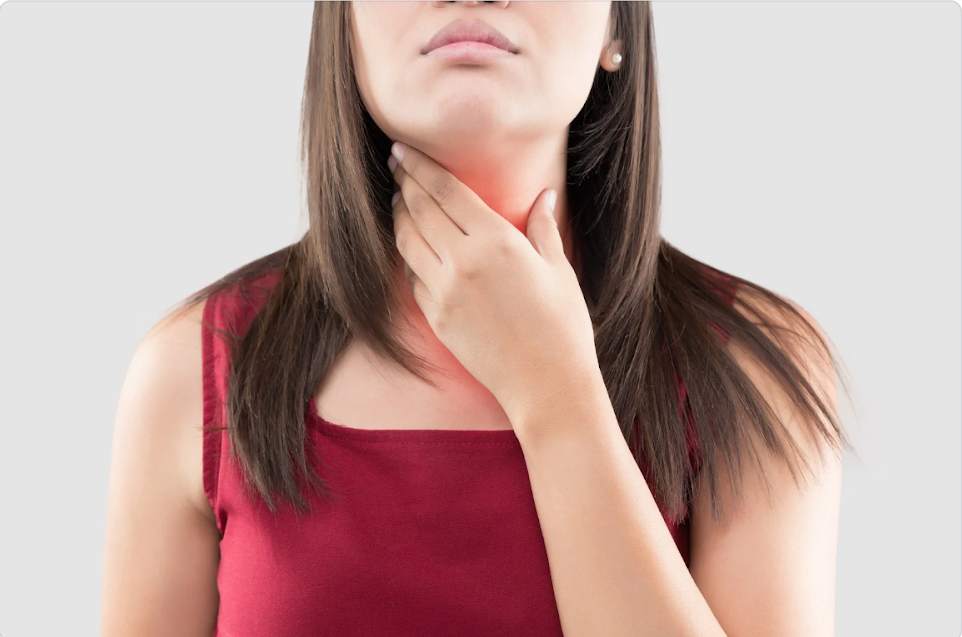
Have you ever felt a lump/mass in your neck and concluded that it might be a symptom of thyroid cancer? A thyroid lump/thyroid nodule is characterised by a growth in your thyroid gland, which causes swelling/enlargement of the thyroid. There are various types of thyroid nodules, and most of them are benign (non-cancerous). Although thyroid cancer is rare, it does occur. Even more concerningly, the symptoms of thyroid cancer may overlap with other types of thyroid conditions.
This article will help you better understand the nature of thyroid lumps: their types, treatment options, and symptoms. This information will also help you demarcate between thyroid cancer and other related conditions and aid you in taking the appropriate precautionary steps and seeking professional medical care.
What Are Thyroid Lumps?
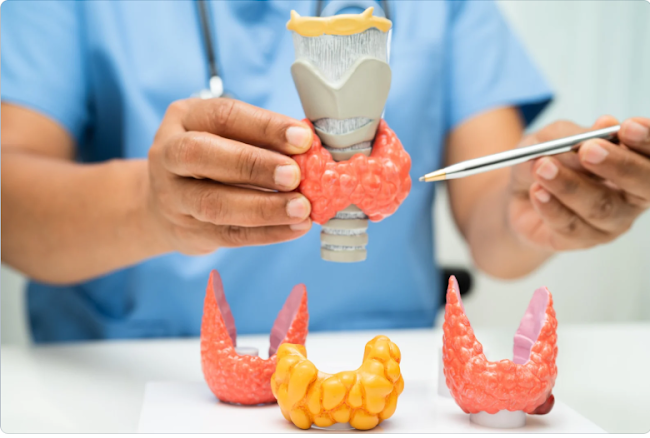
Your thyroid gland is a small butterfly-shaped endocrine gland in your neck, just below the Adam’s apple. Its primary functions are to produce thyroxine (T4) and triiodothyronine (T3), which play an important role in influencing your:
- Metabolism
- Body temperature
- Blood Pressure
- Heart rate
- Reaction to other hormones.
Thyroid lumps are a result of unusual growth of cells on your thyroid gland; thyroid lumps can be categorised into several types as follows:
- Colloid Nodules: This is the most common type of thyroid nodule, which is characterised by a buildup of benign nodules.
- Thyroid cysts: These are fluid-filled sacs inside the thyroid gland that can be entirely fluid-filled or have solid components.
- Inflammatory Nodules: Develop due to chronic thyroiditis (inflammation of the thyroid gland). Some patients may experience pain and discomfort.
- Multinodular Goitre: This is an enlarged thyroid gland with multiple nodules. They are usually benign.
- Follicular Adenomas: Benign tumours which can lead to hyperthyroidism.
Apart from these conditions, thyroid cancer is another thyroid issue some patients may face. It’s important to get immediate medical treatment from a neck lump specialist if you have been diagnosed with this cancer. Let’s discuss the symptoms of these thyroid conditions and compare them against the symptoms of thyroid cancer.
Symptoms of Thyroid Lumps: How to Tell If They’re Cancerous?
Common symptoms of a thyroid lump are:
- A visible lump on the neck
- Pressure or tightness in the throat
- Difficulty swallowing or breathing
- Hoarseness of voice/voice change
Depending on the type of thyroid condition, patients may experience varying symptoms. For those with an underactive thyroid, common symptoms include:
- Unusually slow heart rate than the norm
- Persistent fatigue
- Unexplained weight gain
- Sensitivity to cold
- Dry skin and coarse hair
- Depressed mood
- Heavy menstrual periods
Conversely, those with hyperthyroidism may experience:
- Increased heart rate (tachycardia)
- Difficulty sleeping
- Unexplained weight loss
- Sensitivity to heat
- Sweaty skin
- Feeling anxious, irritable, or nervous
- Irregular menstrual cycles or a lack of periods
Unfortunately, there’s no way a patient could determine if a thyroid nodule is cancerous based on his/her symptoms. Thyroid cancer often can be asymptomatic at the start; however, as it progresses, a few symptoms, such as swelling in the neck, voice change, and difficulty swallowing, will be present. This is where a thyroid surgeon in Singapore can help.
What is Thyroid Cancer: How is it Diagnosed and Treated?
Thyroid cancer is a result of changes/mutations in the DNA of the cells in the thyroid. These mutations cause the cells to live when they are supposed to die. These cells form a mass which doctors refer to as a ‘tumour’.
There are different types of thyroid cancer; most types grow slowly, but others can be aggressive. Nonetheless, these cancers can be cured with the appropriate treatment. In Singapore, thyroid cancer is the eighth most common cancer in women, with an annual incidence of 1100 cases/year. Its incidence has been rising globally, and it is the fastest-growing cancer in women. The exact reason for this increment is unknown, but research suggests that it could be due to a mix of factors, such as hormonal differences and genetic predispositions.
Thyroid cancer can be classified into a few types, namely:
- Papillary thyroid cancer:
A rather common cancer type that predominantly affects people in the 30-50-year age range. Papillary thyroid cancer is small and responds well to treatment, even if it has spread to the lymph nodes in the neck. However, a small portion of these cancers can be aggressive and may grow to involve structures in the neck or even spread to other parts of the body. - Follicular thyroid cancer:
It’s usually not an aggressive cancer and doesn’t spread to the lymph nodes in the neck. It mainly spreads to the lungs and bones. The main demographic affected by this type of cancer is people older than 50 years. - Hurthle Cell Thyroid Cancer:
This is a rare type of cancer which, interestingly, used to be considered a type of follicular thyroid cancer. It is now a standalone cancer due to the different behaviour of the cancer cells and their varied response to the treatment in comparison to follicular thyroid cancer. Hurthle cell thyroid cancer is a highly aggressive type that grows to involve structures in the neck and spreads to other areas of the body. - Poorly Differentiated Thyroid Cancer:
This is the most aggressive form of differentiated thyroid cancer and doesn’t respond well to treatment solutions. - Anaplastic Thyroid Cancer:
This is another aggressive cancer that spreads quickly and is difficult to treat. Oftentimes, the treatment is primarily utilised as a means to slow the progression of the disease. It often leads to difficulties breathing and swallowing. The main demographic at risk of developing this cancer is those above the age of 60. - Medullary Thyroid Cancer:
It begins in the thyroid cells named the ‘C cells’, which are responsible for producing the calcitonin hormone. Elevated levels of calcitonin in the blood are symptomatic of medullary thyroid cancer at a very early stage.
It can also be caused by a gene called the RET gene, which is passed from parent to child. This gene is responsible for making a protein that plays an important role in cell growth and differentiation, and in the development of nerve cells in the body. Mutations (changes) in the RET gene may cause the protein made by this gene to become overactive, causing abnormal cells, including cancer cells, to grow. In particular, the changes in the RET gene can cause familial medullary thyroid cancer and multiple endocrine neoplasia type 2. Furthermore, multiple endocrine neoplasia type 2 increases the risk of other cancers, such as adrenal gland cancer. - Other Rare Types:
These include thyroid lymphoma, which begins in the immune system cells of the thyroid gland, and thyroid sarcoma, which begins in the connective tissue cells of the thyroid.
A thyroid specialist in Singapore will recommend a few diagnostic tests to get started. For instance, they may recommend any of the following diagnostic methods:
- Blood Tests: Used to assess the thyroid hormone levels in the blood. It is an indicator of abnormal thyroid function.
- Thyroid Function Test: To assess the gland’s hormone production levels.
- Ultrasound: An effective imaging tool used to gauge the size, number, and characteristics of the nodule affecting thyroid function.
- Fine Needle Aspiration Biopsy (FNAB): A minimally invasive procedure where a thin needle is inserted to retrieve cells from the nodule. This method is considered an accurate way of determining if it’s benign or malignant.
- Thyroid Scan: Utilises radioactive iodine or technetium to evaluate nodule function. It’s helpful to detect nodules causing hyperthyroidism.
It’s crucial to consult a thyroid surgeon in Singapore if you suspect you have thyroid cancer. If the cancer is in an advanced stage, the chances of recovery are slim. Therefore, if you want to prevent further complications, it’s important to go for regular health screenings, especially if you’re at risk of developing thyroid cancer. Let’s briefly discuss a few risk factors.
Who Is at Risk of Getting Thyroid Cancer
For now, researchers have no substantive evidence to claim the exact cause of thyroid cancer, but they have determined that certain individuals are at a higher risk of contracting it due to a combination of factors, such as:
- Sex: Researchers claim that thyroid cancer has a higher incidence in women because the disease is linked to the oestrogen hormone, which is more present in women.
- Exposure to Radiation: If an individual has undergone radiation therapy to the head and neck, there is an increased likelihood of getting thyroid cancer. This also applies to individuals working in radioactive environments.
- Certain Genetic Predispositions: Genetic syndromes like familial medullary thyroid cancer, multiple endocrine neoplasia, Cowden syndrome, and familial adenomatous polyposis all can increase the risk of getting thyroid cancer.
- Age: If you’re between the ages of 30 and 60.
If you have any of these risk factors, it would be best to get a regular checkup done, even if you feel perfectly fine; better safe than sorry!
Please consult our experienced thyroid surgeon, Dr Ker Liang, for an accurate diagnosis and personalised treatment plan.
Are Thyroid Cancer Treatments Effective?
If you have been recently diagnosed with thyroid cancer and are wondering what your chances for recovery are, there are a few things you will need to consider.
Your recovery will entirely depend on your prognosis, the type of thyroid cancer you have, its stage, and how aggressive it is. Unfortunately, even though there is a successful removal of the thyroid, there is still a chance that the cancer will return. This can happen if the cancer cells had spread beyond the thyroid before it was removed. Thyroid cancers, such as papillary and follicular cancer, rarely recur, but more aggressive types could. The treatment for thyroid cancer includes:
- Removal of the Entire Thyroid Gland (Thyroidectomy): Surgical removal of the thyroid gland can involve extracting the entirety of the thyroid tissue (known as a total thyroidectomy) or nearly all of it (a near-total thyroidectomy). In many cases, surgeons will preserve small sections of thyroid tissue surrounding the parathyroid glands to help protect their function and reduce the risk of damage. These glands are essential for maintaining proper calcium levels in the bloodstream.
- Partial Removal of the Thyroid (Thyroid Lobectomy/Hemithyroidectomy): A thyroid lobectomy involves the surgical removal of one half of the thyroid gland. This procedure is typically advised for patients with a slow-growing thyroid cancer confined to one side of the thyroid, with no concerning nodules in the remaining gland and no evidence of cancer in the lymph nodes.
- Removal of Lymph Nodes in the Neck (Lymph Node Dissection): Thyroid cancer can spread to lymph nodes in the neck; a pre-surgery neck ultrasound may be performed to check for signs of cancerous spread. If affected lymph nodes are detected, the surgeon may remove them during the operation for further examination.
If you want an accurate diagnosis and tailored treatment solutions to ensure your thyroid cancer is treated optimally, you should consult Dr Ker Liang, an experienced neck lump specialist in Singapore at Aglow ENT Centre.
Book a Same-Day Consultation with Dr Ker Liang at Aglow ENT Centre for Thyroid Lumps Treatment
If you have a thyroid lump or suspect that you have a thyroid lump, you can schedule a consultation with Dr Ker Liang, who is the Medical Director and Consultant Otolaryngologist at Aglow ENT Centre. Dr Ker Liang has over 14 years of experience managing various head and neck conditions, such as thyroid lumps and thyroid cancer. Aglow ENT Centre is located at Mount Elizabeth Hospital (Orchard) and accepts walk-ins and same-day appointments.